
In 2026, enterprise restaurant chains no longer evaluate POS systems as transactional tools. POS is now core infrastructure—expected to support governance, scale, and consistent execution across increasingly complex organizations.
Industry research reinforces this shift. According to Hospitality Technology’s 2026 POS Software Trends Study, strengthening POS integration and platform cohesion is the top strategic priority for restaurant technology leaders, overtaking feature expansion alone. At the same time, Restaurant Business and Nation’s Restaurant News’ 2025 Restaurant Technology Outlook found that enterprise operators are increasingly frustrated not by a lack of technology, but by systems that struggle to work together at scale.
So what exactly do enterprise chains expect from a POS today—and where do systems tend to fall short?
1. Centralized Control Without Slowing the Stores
Enterprise brands expect to manage menus, pricing, promotions, and configurations centrally while preserving speed and clarity at the store level.
This balance is harder than it sounds. Many POS platforms swing to extremes—either over‑centralizing in ways that create operational friction, or allowing too much local variation with limited oversight.
Enterprise leaders don’t want choice chaos. They want guardrails that enable consistency without forcing store teams into workarounds.
2. Data That Executives Can Trust
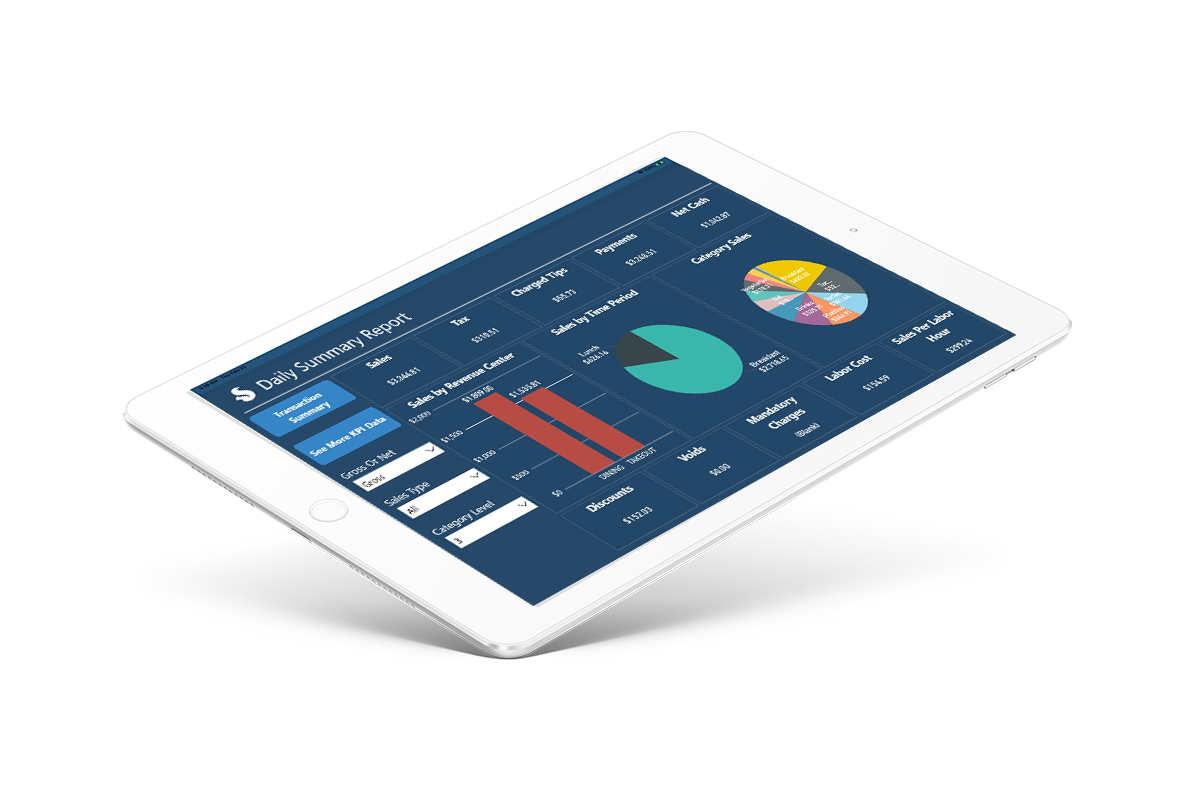
At the enterprise level, inconsistent reporting isn’t just inconvenient—it undermines decision‑making.
Hospitality Technology’s research consistently highlights data fragmentation as a core POS challenge, especially in multi‑system environments.¹ Enterprise organizations expect:
- Standardized metrics
- Consistent reporting across locations
- Confidence that everyone is using the same numbers
Systems most often fall short when data models vary by module, integration, or deployment type—forcing finance or operations teams to reconcile information manually.
3. Integration That Feels Designed, Not Assembled
Enterprise restaurant tech stacks are ecosystems: POS, payments, loyalty, inventory, labor, BI, and finance systems all need to work together.
According to Restaurant Business’ technology outlook survey, operators increasingly cite integration challenges and ongoing system “cleanup” as sources of dissatisfaction—even when individual tools perform well on their own.
What enterprise chains expect instead is accountability:
- Clear ownership of integrations
- Predictable behavior across systems
- Minimal store‑level intervention when issues arise
When POS platforms weren’t built with ecosystem orchestration in mind, the burden shifts downstream—often landing on store managers.
4. Operationally Responsible Change Management
The pace of innovation has accelerated, but enterprise organizations still expect predictability.
Hospitality Technology’s studies show that restaurants want POS platforms to be more “solution‑centric” rather than release‑driven—supporting operational outcomes, not constant change.
Frequent updates without clear communication or training may look agile on paper, but they introduce friction across large store networks.
The Pattern Behind the Gaps
Across these areas, the issue is rarely features. It’s fit.
Many POS systems struggle at the enterprise level because they were designed for speed of deployment, not long‑term organizational complexity. Enterprise chains, by contrast, value repeatability, governance, and reliability as much as innovation.
Final Thought
For enterprise restaurant chains, POS decisions are long‑term commitments. The systems that succeed in 2026 won’t necessarily be the loudest or newest—they’ll be the ones aligned with how complex organizations actually operate.
As industry research continues to show, enterprise leaders aren’t asking for more tools. They’re asking for platforms that hold together under pressure.